AiBO Electric
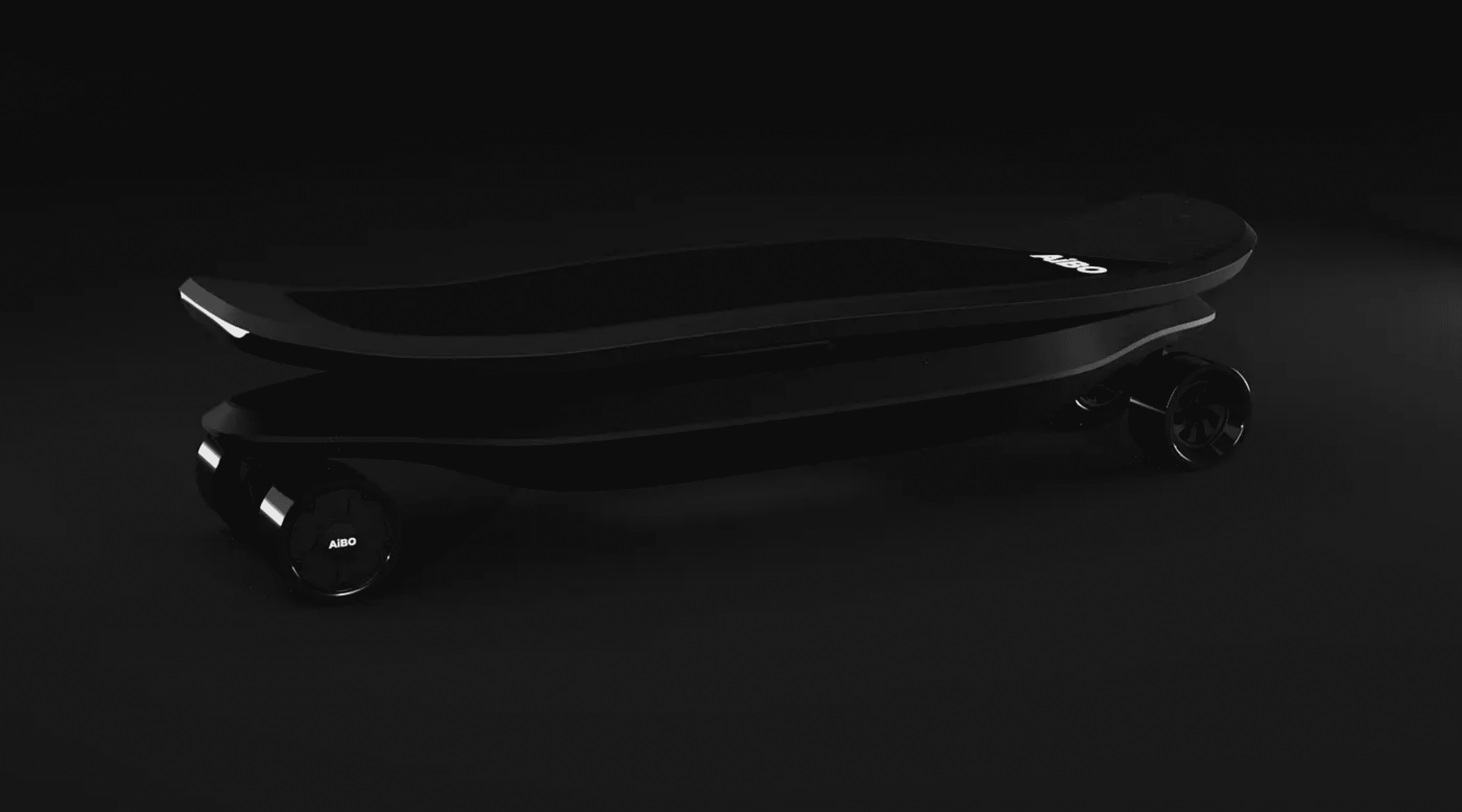
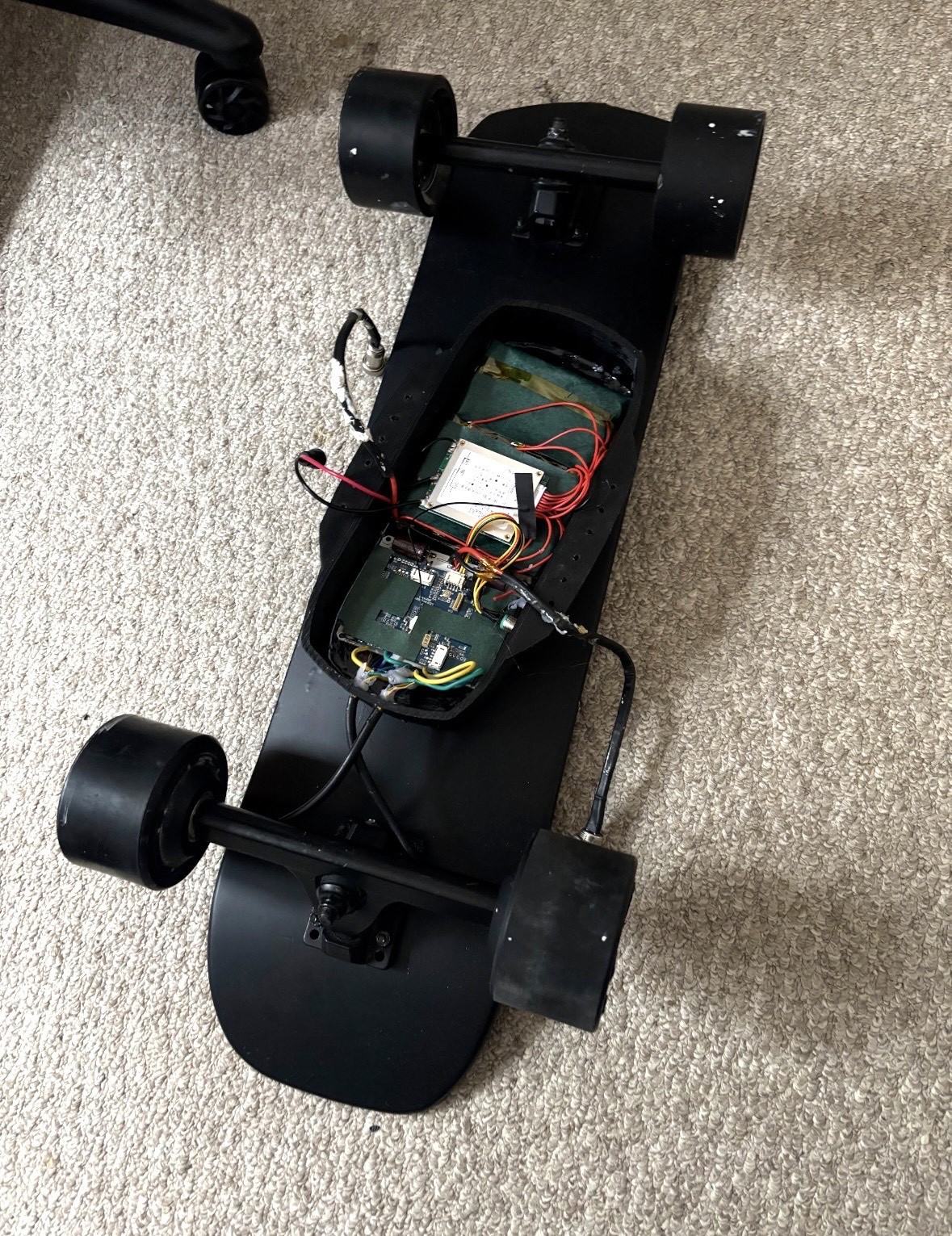
AiBO is an electric skateboard reimagined from the ground up, controlled not by a cheap handheld remote but by a custom leaning deck that lets riders accelerate and brake just by shifting their weight.
00
problem
Electric skateboards have a control problem. Almost all of them rely on a handheld remote, and most of those remotes are cheaply mass-produced with inconsistent quality control, defective buttons, faulty batteries, laggy throttles, and the occasional unintended acceleration. That's a serious flaw on a vehicle capable of 50+ mph. It's also one more device to keep charged, and an uncharged remote means a board you can't ride. On top of that, e-skates share sidewalks and bike lanes with pedestrians and cyclists, yet carry far higher injury rates than bikes or cars, with no safety systems to speak of. A high-speed vehicle deserves better than a toy-grade controller and no collision awareness.
solution
AiBO removes the remote entirely. Its signature innovation is a leaning deck acceleration system: a deck positioned slightly above the base that lets riders accelerate by leaning forward and brake by leaning back, the same intuitive weight-shift skaters already use to turn, now extended to speed control. The lower deck stays level and stable on four wheels while the rider commands the board through natural body movement, making control feel like an extension of the rider rather than a gadget in their hand. Safety is built in through an onboard ADAS suite. A React Native app connects to the board over Bluetooth Low Energy for real-time, bi-directional telemetry, letting riders monitor speed, battery, and range, configure performance profiles, and fine-tune the board to their style. An Arduino-based system fuses IR and radar sensor data for predictive regenerative braking, which extended range by roughly 8% across 50+ urban test routes, while voice control delivers directions and live updates straight to the rider's ear. Detachable extended battery packs round it out for longer trips.
Electric skateboards are what sparked my love for technology in the first place. When Boosted Boards were taking off, I wanted one badly, but I figured I had a better shot convincing my parents to fund a project than to just buy me one. So at 14, I set out to build my own. I taught myself how to wire circuits, how to solder, how to turn a pile of components into something that actually moved. That first board was rough, but it worked, and it hooked me.
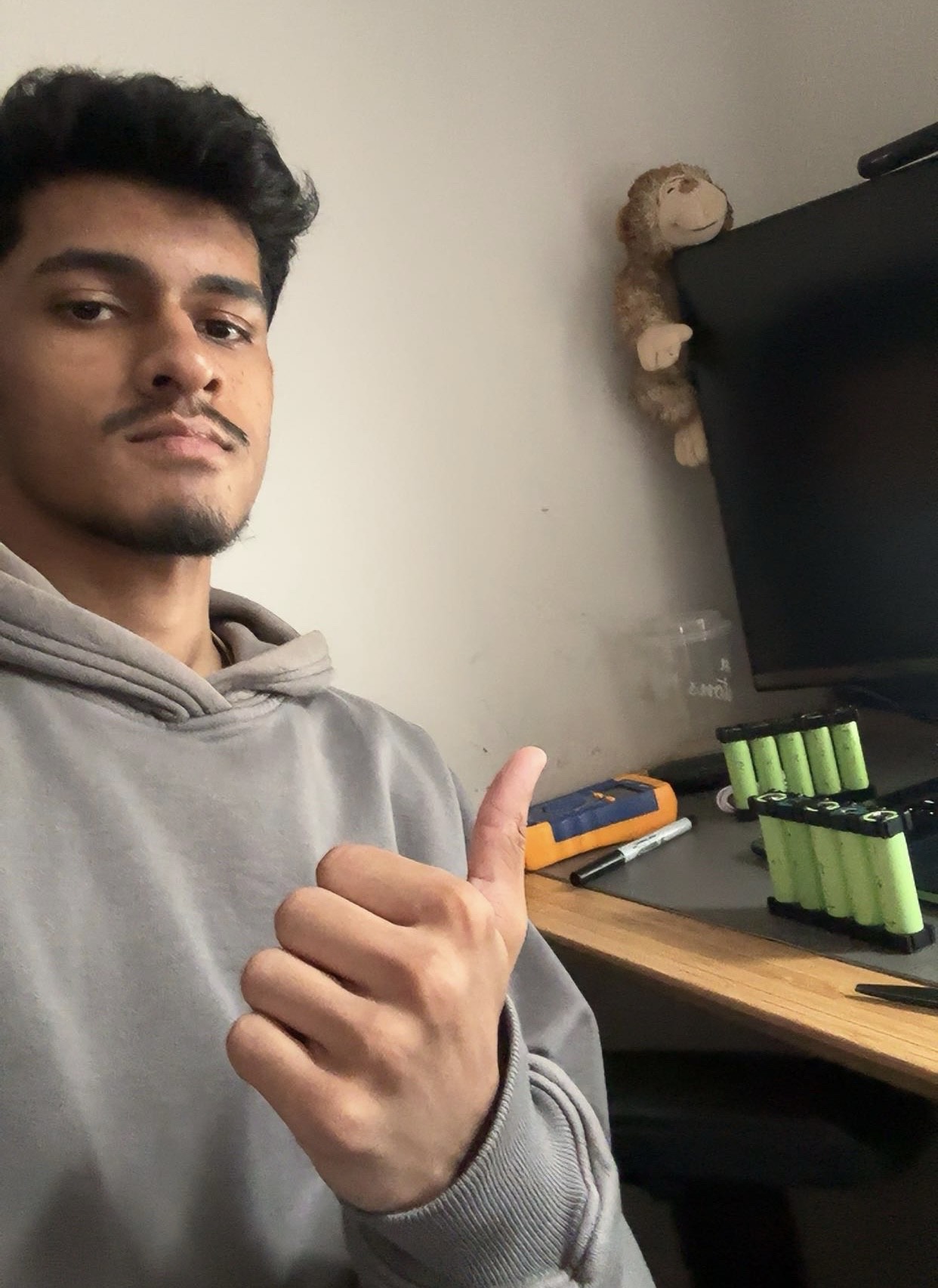
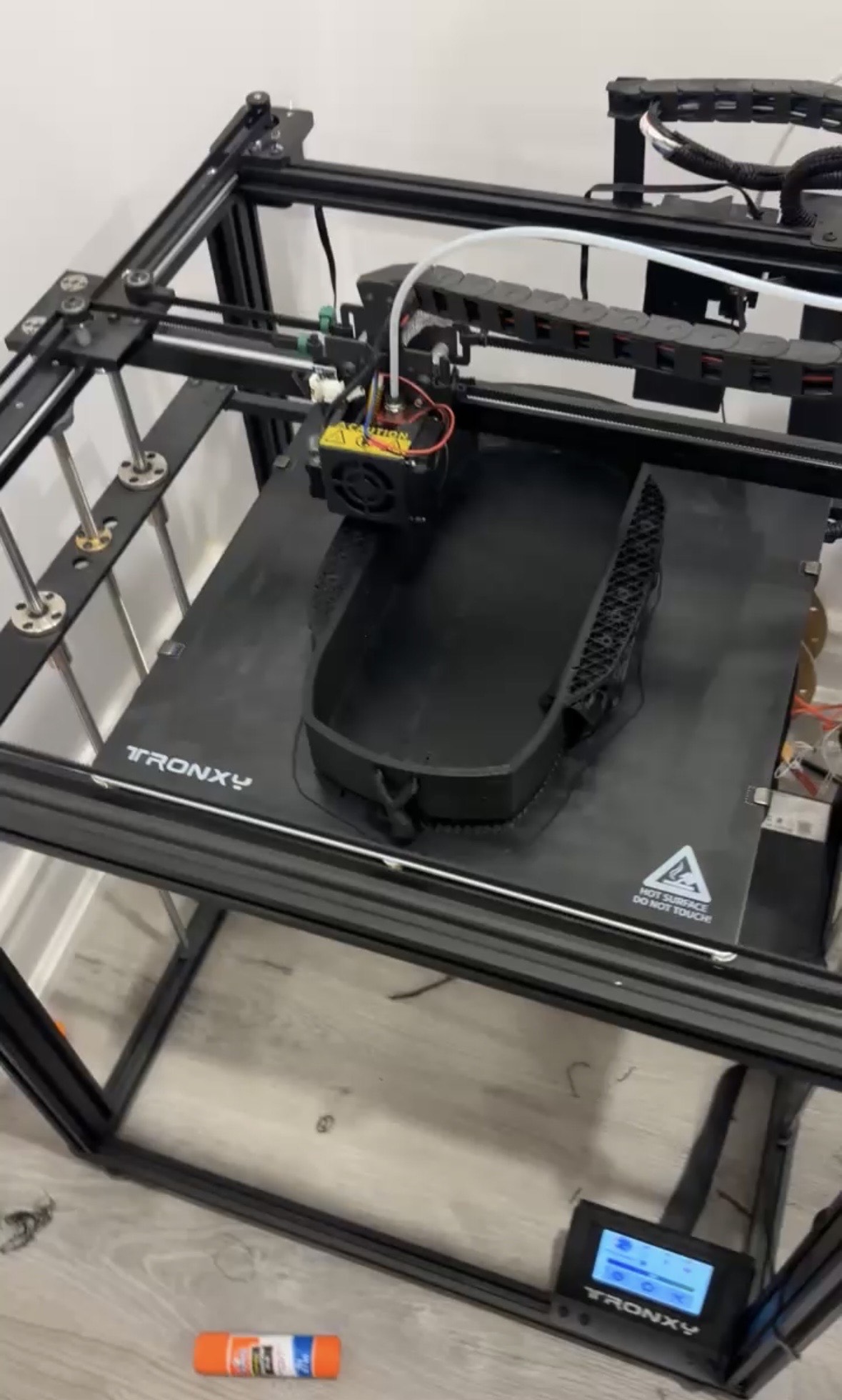
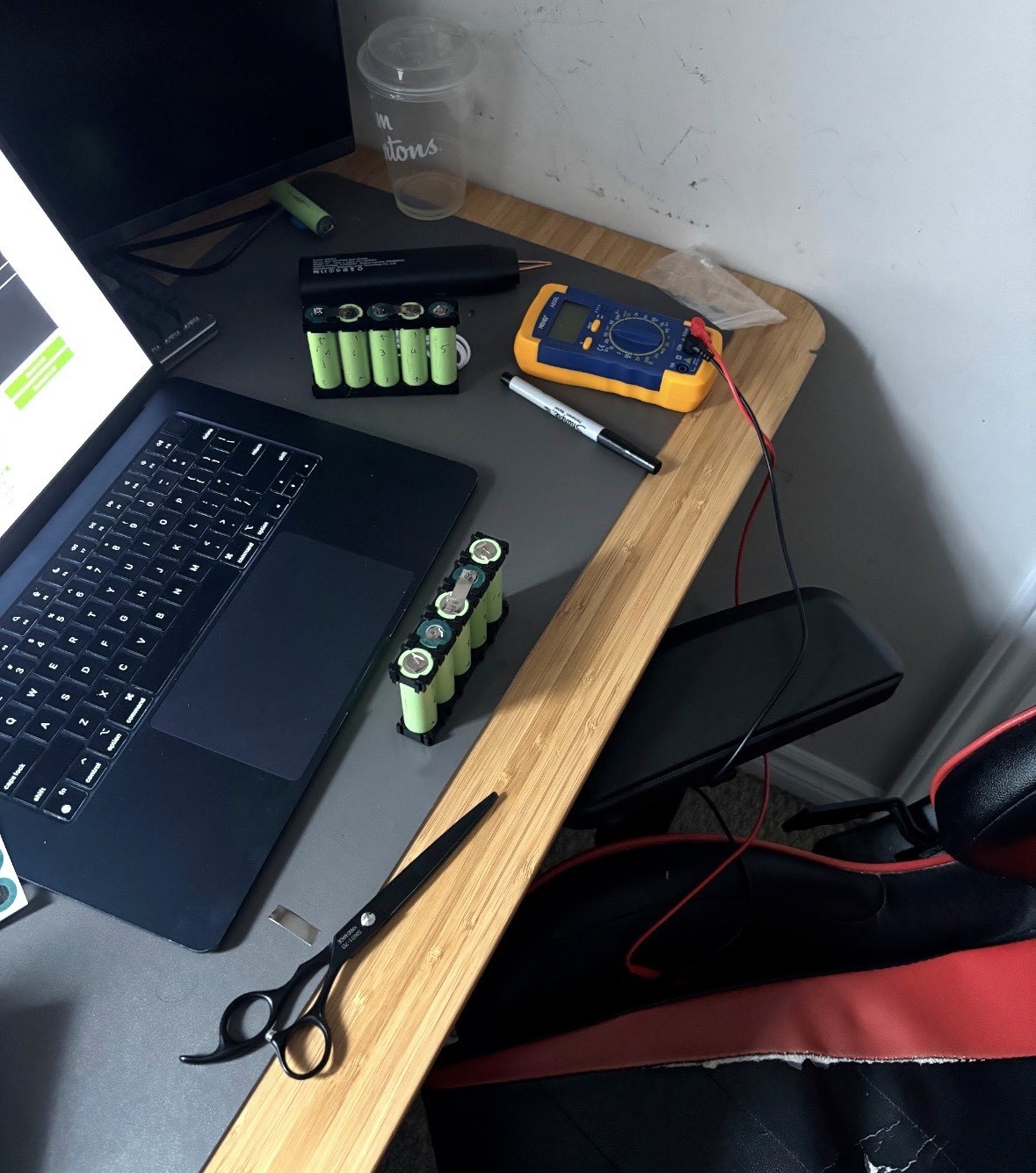
From there it became an obsession of iteration. I rebuilt the board again and again, each version better than the last. I upgraded the circuitry. I learned to weld so I could build my own battery packs. I programmed the microcontrollers that ran it. I taught myself to fabricate fiberglass enclosures and to 3D print custom parts so the hardware could actually house everything cleanly. Every iteration taught me something the last one couldn't, and every failure pointed at the next thing I needed to learn.
Eventually I stopped copying what existed and started inventing. I designed something genuinely novel, the leaning deck system that let a rider accelerate and brake by shifting their weight instead of holding a remote. I believed in it enough to write and file my own provisional U.S. patent for it, learning the patent process from scratch along the way.
But building the product turned out to be only half of it. To bring AiBO into the world, I had to learn an entirely different set of skills. I picked up Fusion 360 to model every mechanical assembly. I built the company's website, set up a mailing list, and marketed on social media. I learned Blender to render product images, and how to shoot and edit video. I ran a go-to-market launch that converted 1,000+ waitlist subscribers into 70+ paid pre-orders, owning the whole journey from value proposition to customer conversion.
AiBO taught me more than any single project I've worked on. It's where I learned that I could teach myself almost anything if I wanted it badly enough, hardware, firmware, mechanical design, patents, branding, marketing, and that the gap between an idea and a real product is just a long series of problems you decide to solve one at a time. Everything I build now traces back to that first board in my garage at 14.
year
2022 — 2025
timeframe
3 years
tools
Android Studio · C++ (Arduino) · BLE · IR / Radar Sensors · Fusion 360 · 3D Printing · Fiberglass Fabrication · Battery Welding · Blender
category
Personal Project
01
02
03
04