NCAR
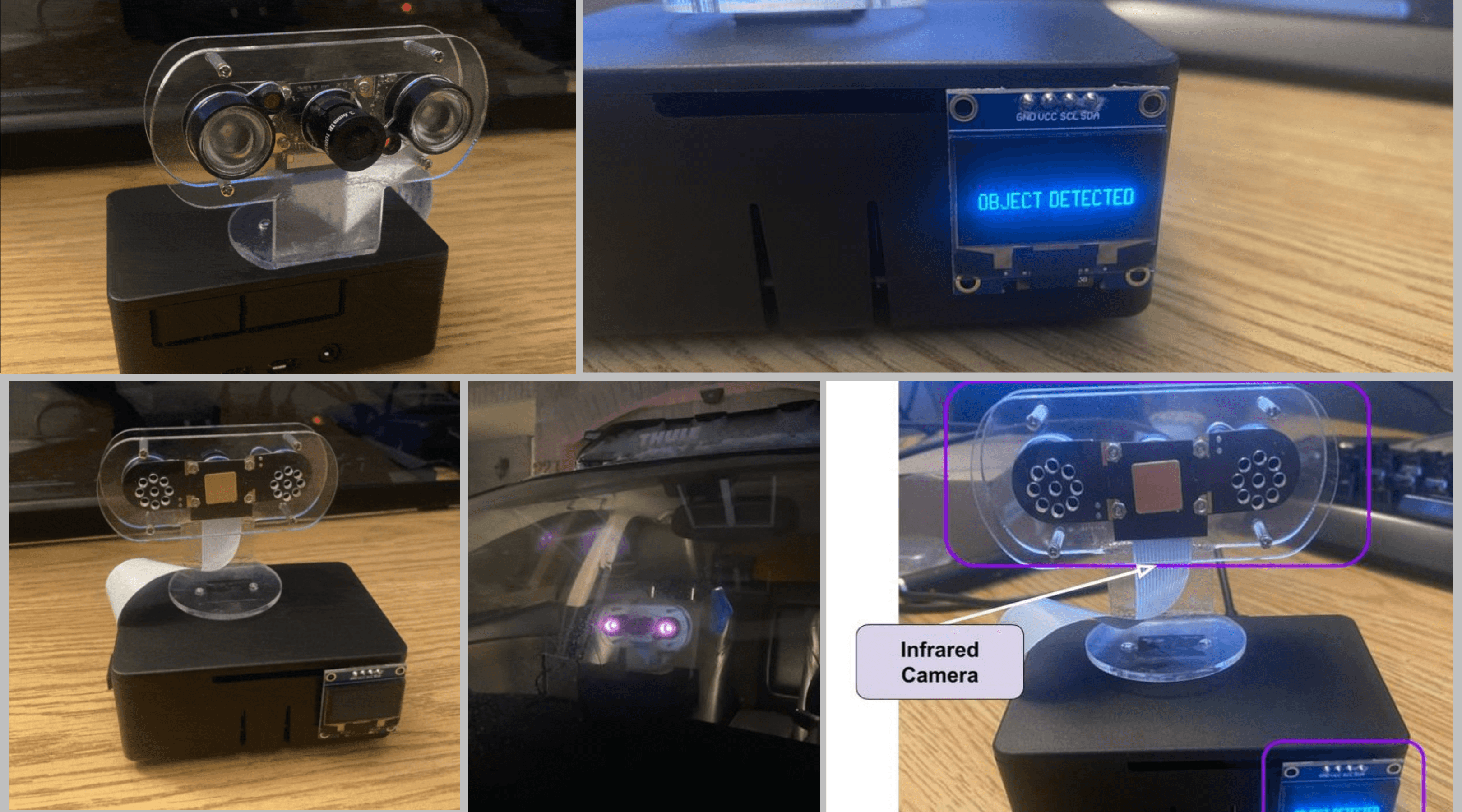
NCAR is a wearable night-vision safety system that gives drivers an extra pair of eyes in the dark. Using an infrared camera and a machine learning model, it detects obstacles on the road when visibility is poor and projects a warning onto the windshield, helping drivers see hazards that headlights, glare, and fatigue would otherwise hide.
00
problem
Driving at night keeps getting harder. As manufacturers and drivers fit brighter and brighter headlights, oncoming traffic becomes blinding, and between that glare, fatigue, and the difficulty of judging distance in the dark, safe nighttime driving is increasingly difficult. Pedestrians and obstacles can be nearly invisible until it's too late to react. What drivers need is a second set of eyes that doesn't depend on visible light at all.
solution
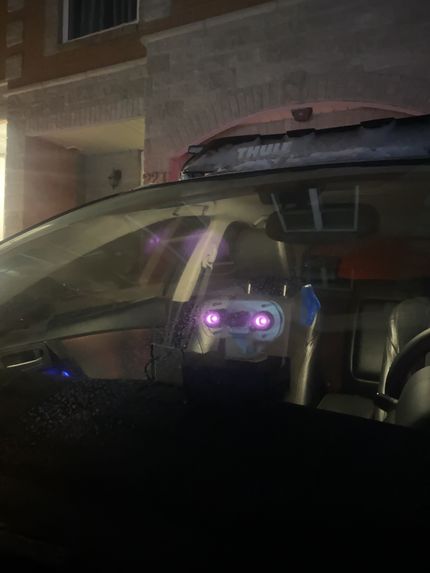
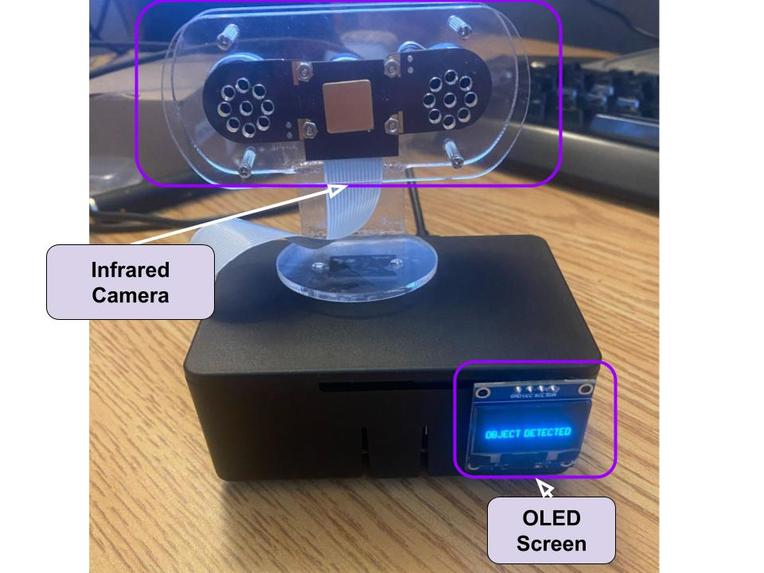
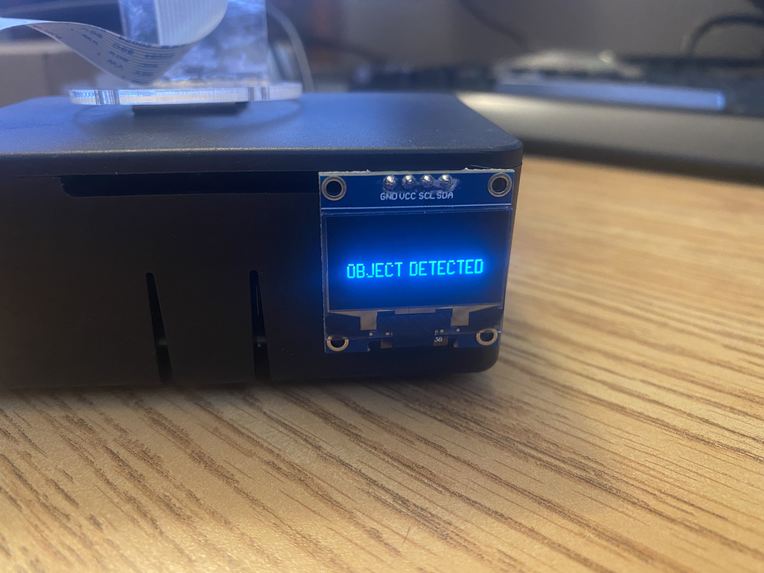
NCAR is an affordable, portable system that can be added to any car. At its heart is an infrared camera that sees in total darkness, paired with a TensorFlow machine learning model that classifies obstacles, detecting a person on the road from 5–7 meters away even in pitch black. When it spots a hazard, the system projects a beam of light through a one-inch OLED display onto the windshield, alerting the driver in real time without forcing their eyes off the road. The whole system runs on a Raspberry Pi 4B, with OpenCV handling the computer vision pipeline and PyGame driving the display output. It also doubles as a safety backup: if the car's headlights fail, the infrared camera can act as a powerful substitute light source, keeping the driver oriented until they can stop safely. The design is deliberately compact and car-agnostic, built to be implemented on any vehicle rather than a single make or model.
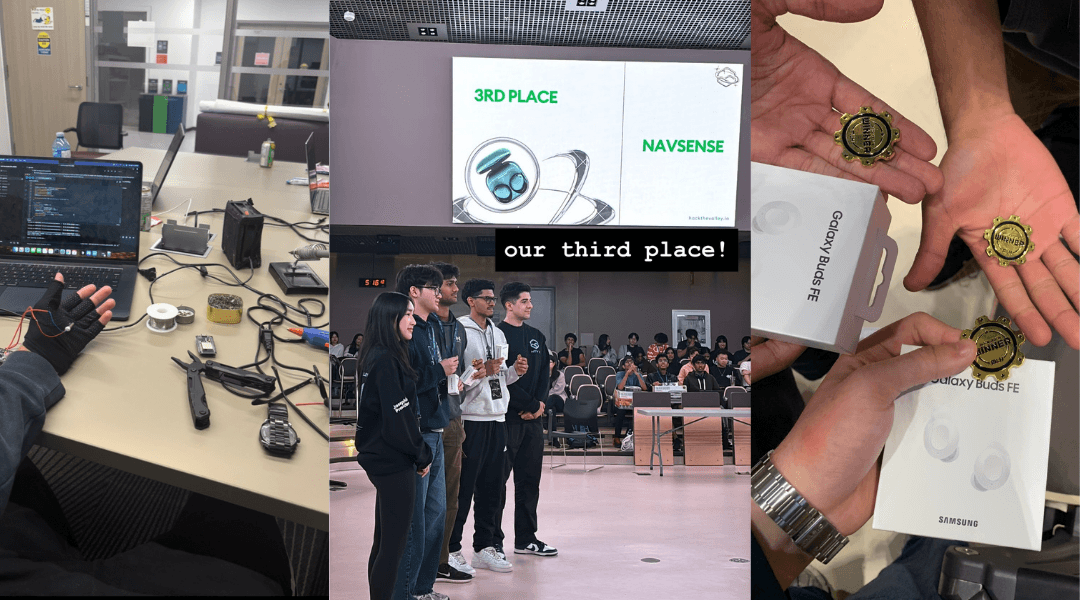
NCAR was built at MakeUofT 2022, where it won the Transport & Travel category.
The project came together around a simple but stubborn problem: the road gets genuinely dangerous at night, and the technology meant to help, ever-brighter headlights, often makes it worse. The team's answer was to stop relying on visible light entirely and lean on infrared vision plus machine learning to perceive the road the way a human eye can't.
Getting there meant solving hard problems under hackathon pressure. The machine learning model had to learn to reliably pick out human obstacles in infrared footage with very limited training data, the kind of constraint that forces creative use of every sample you have. Hardware threw its own curveballs: the infrared camera broke down partway through, so the team had to fall back on previously captured footage to keep the model running and demonstrable. Wiring multiple hardware sensors to work in concert, and training and running a TensorFlow model on something as constrained as a Raspberry Pi, were both firsts that the build forced everyone to figure out fast.
Beyond the engineering, NCAR was an exercise in collaboration across people with very different backgrounds and skill sets, and in shaping a rough but real prototype into something that could be clearly communicated and demoed. The vision going forward is sharper still: a custom model that not only detects obstacles but calculates their distance, a more intuitive alert system, and a 3D-printed OLED setup that displays warnings more noticeably.
year
2022
timeframe
24 hours
tools
Python · TensorFlow · OpenCV · PyGame · Raspberry Pi 4B · Infrared Camera · OLED Display
category
Hackathon
01
02
03
04