FocusHacks
FocusHacks is a web app that uses machine learning to help students beat procrastination. By visually tracking when a user loses focus, it sends a timely reminder or motivational nudge by email to pull them back to work, turning a webcam and a model into a personal accountability coach.
00
problem
Procrastination is nearly universal among students, roughly 80–95% put things off to some degree, and about half do so consistently and problematically. Around 50% of students don't make the most of their day simply because they get distracted. The intent to focus is usually there; what's missing is something to notice the moment attention drifts and gently steer it back, in real time, before a five-minute distraction becomes a lost afternoon.
solution
FocusHacks watches for that moment. A TensorFlow machine learning model uses the webcam to classify the user's behavior, distinguishing focused work from distraction. When it detects that the user has drifted off task, the app automatically sends an email through Twilio SendGrid with a reminder or motivational quote to nudge them back to work, closing the loop between losing focus and regaining it. The system pairs a front end built in HTML5, CSS3, and JavaScript with a Node.js and Express backend, with the ML model integrated directly into the web page so detection runs live in the browser experience. The same underlying technology extends naturally to a second use case the team explored: protecting privacy in virtual classrooms by detecting when a student tries to photograph a remote session with a phone, then alerting both the student and the teacher to the policy violation.
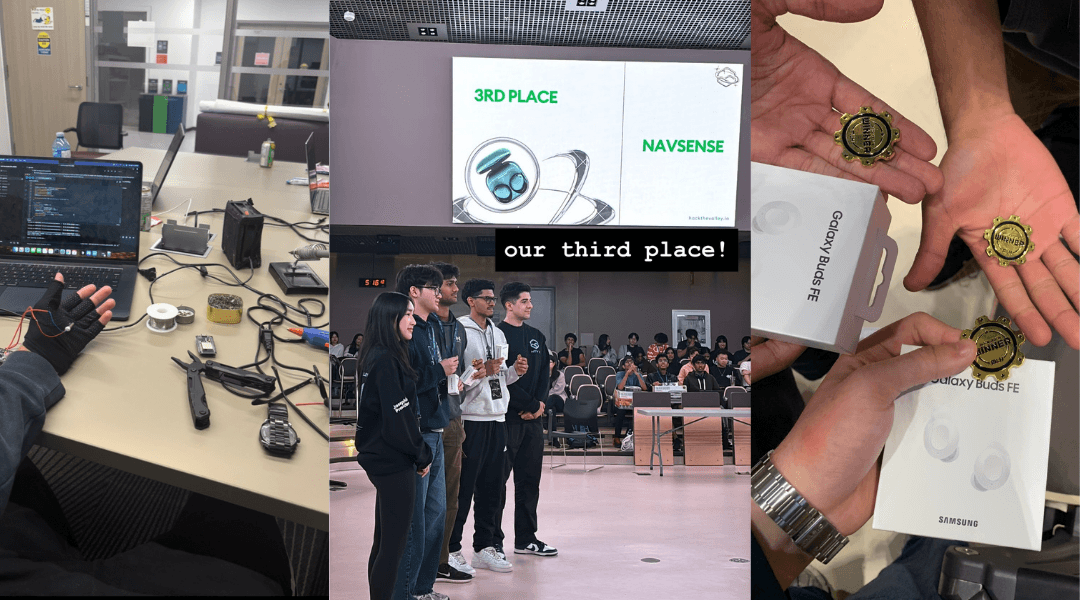
FocusHacks was built at NewHacks 2021, where it won Most Creative Use of Twilio.
The idea started from a problem the team knew firsthand, how much of a student's day quietly disappears to distraction, and the research backs it up: procrastination is the rule, not the exception, and it costs students real productivity. Rather than another to-do list or website blocker, FocusHacks took a different angle: use machine learning to actually see when focus breaks, and intervene in the moment with a personal, motivating message.
Building it meant wiring together a full stack of unfamiliar pieces under a tight deadline. The TensorFlow model had to learn to classify focused versus distracted behavior with limited training data, then be integrated into a live web page rather than living in a notebook. The backend had to detect a lapse and fire off an email promptly enough to matter, which is where Twilio's SendGrid API came in, the integration that ended up defining the project. On top of the technical work, the team was collaborating across different time zones and weathering the usual hackathon gremlins, including Wi-Fi cutting out mid-build.
The project was a crash course in shipping a complete product end to end, training a model, standing up a front end and backend, integrating a third-party API, and using Git to coordinate a distributed team. The roadmap imagined it going further: user authentication with Auth0, a richer model that recognizes more classes of behavior, a companion mobile app for performance tracking, persistent storage in a real database, and deeper use of Twilio's communication APIs to make the nudges even more effective.
year
2021
timeframe
24 hours
tools
TensorFlow · JavaScript · HTML5 · CSS3 · Node.js · Express.js · Twilio SendGrid
category
Hackathon