Lift AI
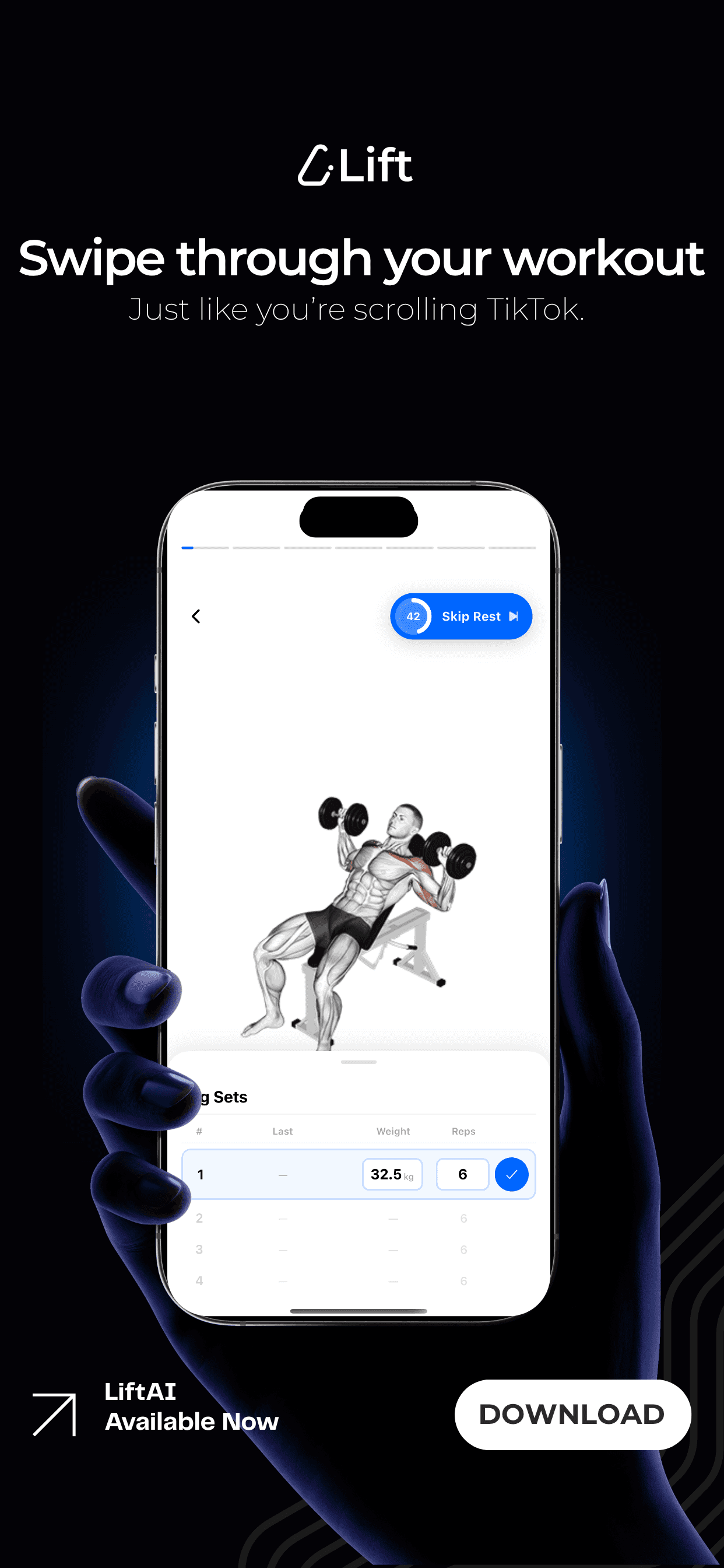
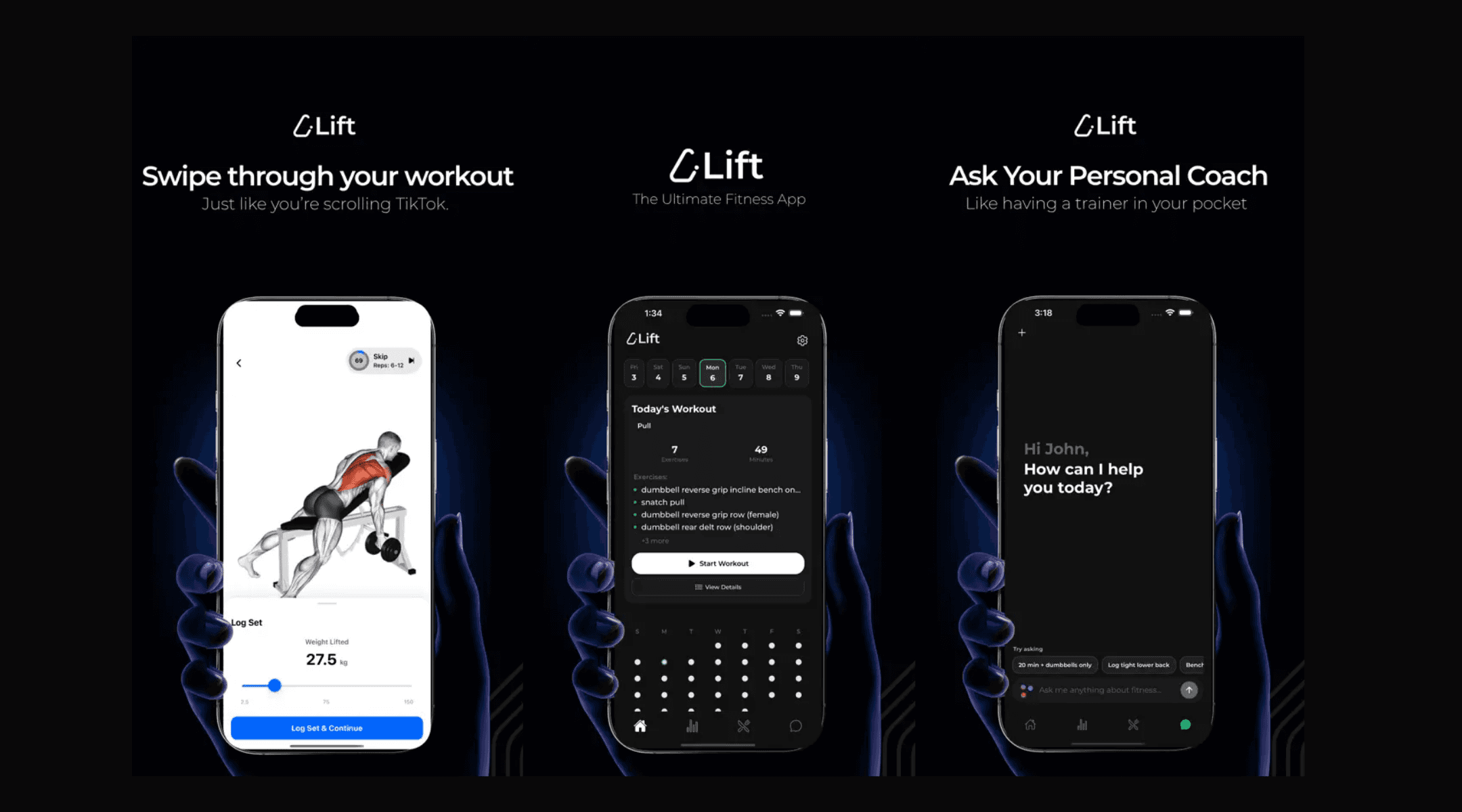
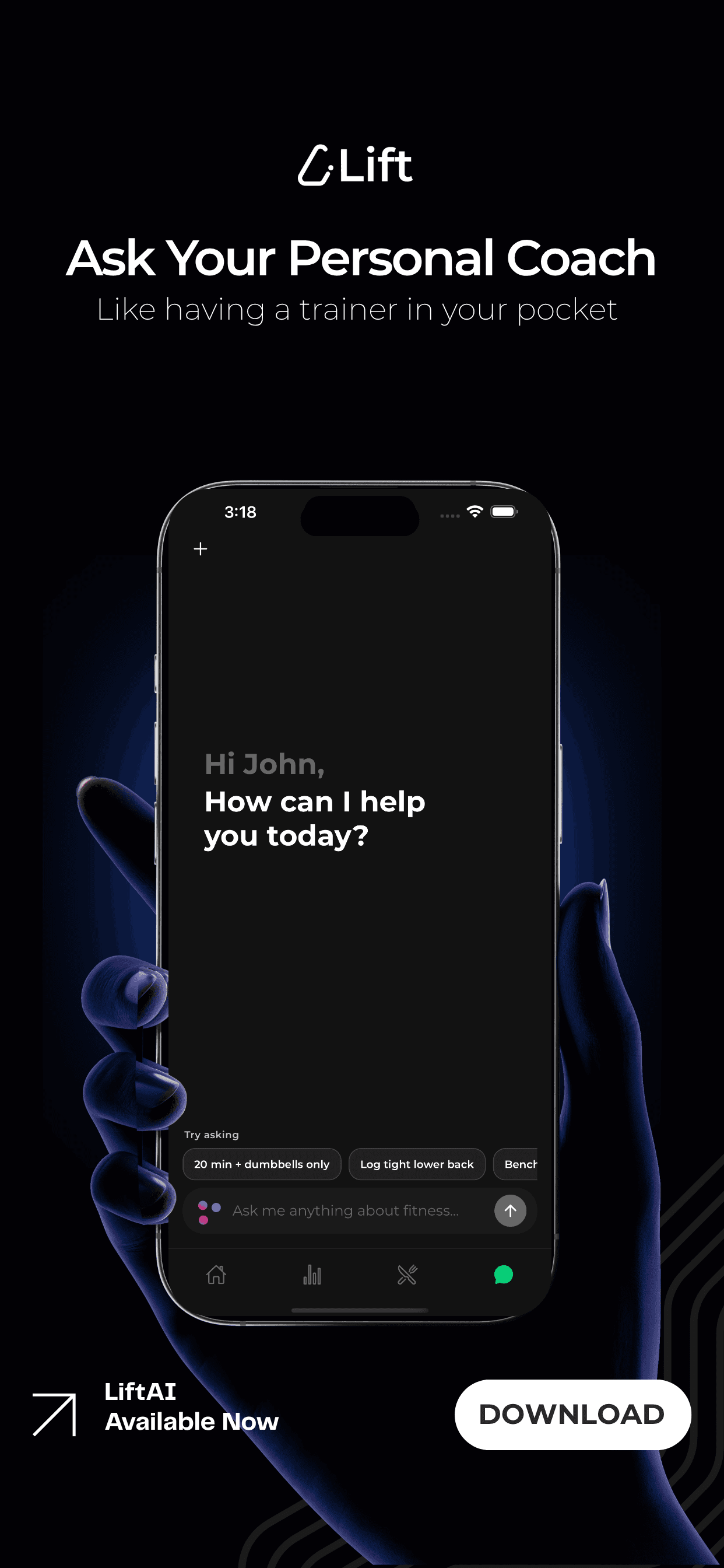
LiftAI is an AI fitness app, live on the iOS App Store, that designs, tracks, and adapts your training in real time.
00
problem
Fitness apps tend to fall into two camps: rigid plan generators that hand you a fixed template and never adapt, or blank trackers that leave all the thinking to you. Neither behaves like a real coach. A good coach builds a plan around your goals, watches how you respond, and changes course when something isn't working, continuously, and with memory of everything that came before. Recreating that with AI is hard, because language models are unpredictable in ways that matter when someone is relying on the output to train safely and consistently.
solution
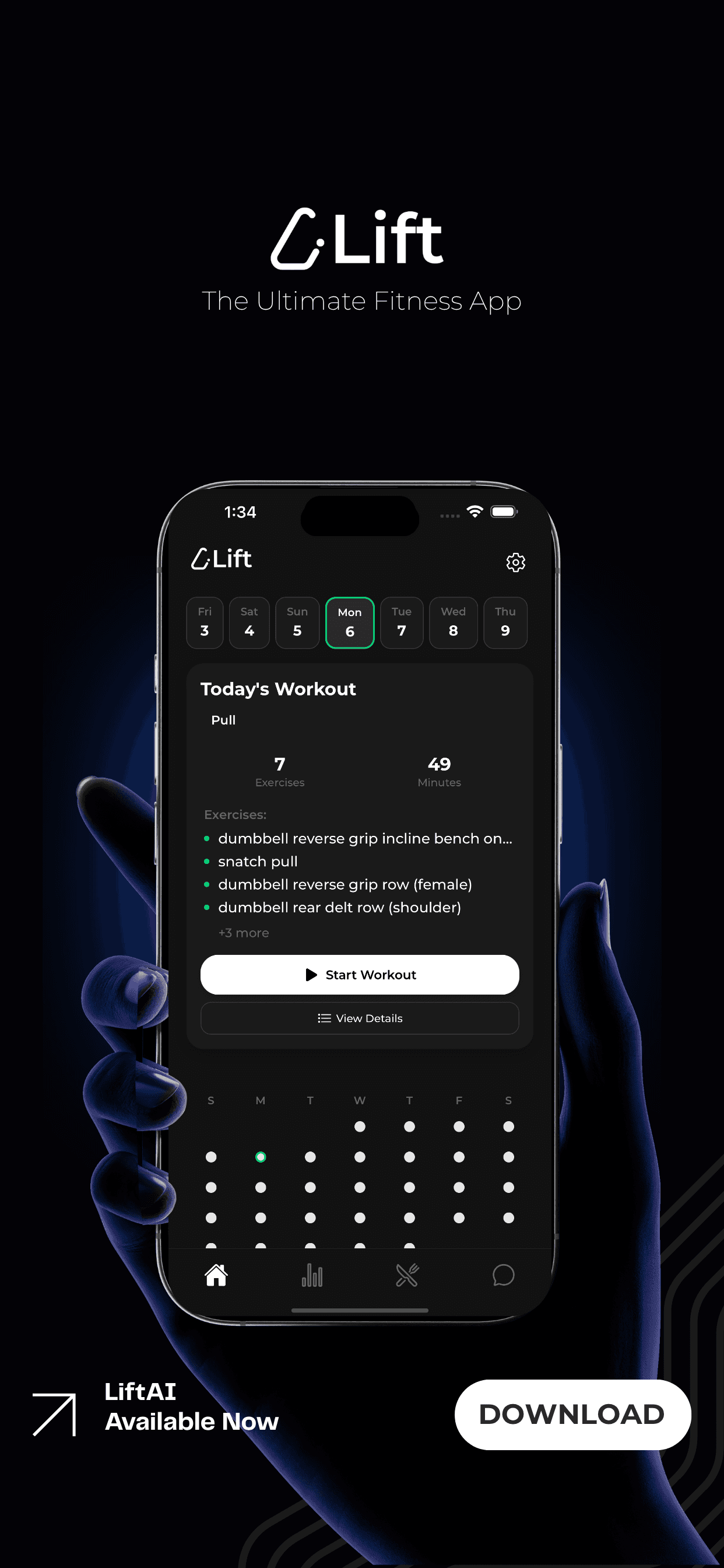
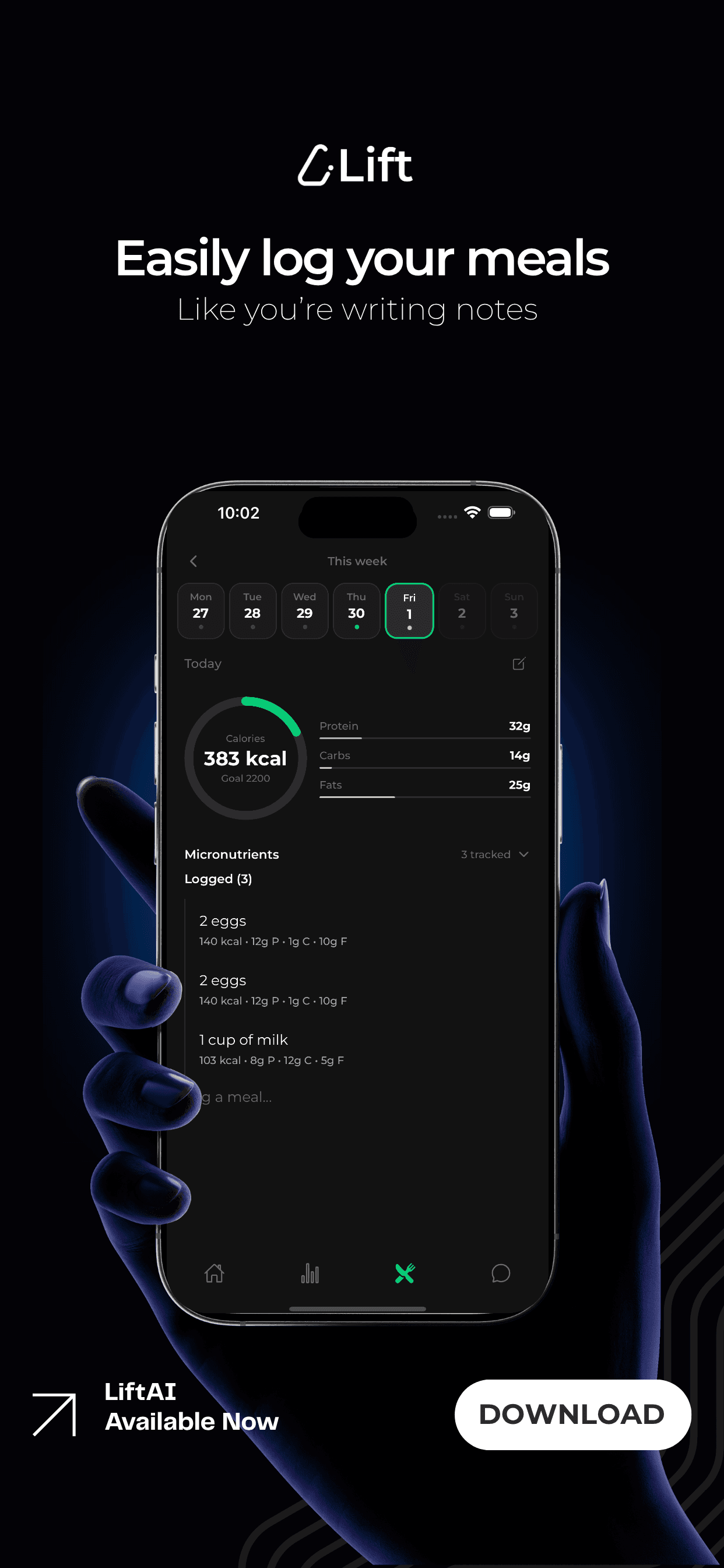
Lift puts a coach-like intelligence behind a clean mobile app. At its core is a stateful LangGraph supervisor coordinating four specialized subgraphs, a planner that builds programs, an editor that modifies them, an analyst that interprets progress, and a memory subgraph that personalizes over time, backed by 12+ tools the agents use to autonomously generate, track, and modify a user's plans. Underneath, a Supabase Postgres and pgvector RAG pipeline supports semantic retrieval over a library of 10,000+ exercises, while long-term memory embeddings carry context from session to session so the app actually learns a user's preferences and history. Everything is served through microservice-style, dependency-injected backend services exposing REST APIs, with responses streamed over SSE at a sub-200ms time-to-first-token so the experience feels immediate rather than like waiting on a model. Because agents fail in ways that ordinary tests don't catch, Lift includes LLM evaluation and monitoring of agent behavior across live sessions, tracking quality, reliability, and hallucination risk, and applying responsible-AI practices to validate what reaches the user. The full stack, from the React Native interface down to the data layer, is built and shipped end to end.
In a single week on the iOS App Store, Lift reached 500+ installs with a 3.5% free-to-paid conversion, early signal that the coaching experience resonates.
It's my current focus, and the first product where I've taken a multi-agent LLM system all the way into production rather than a demo. As founder and lead engineer, I own the whole path: the React Native app, the Node.js services behind it, the agent architecture, the data layer, and the evaluation work that keeps it reliable once real people are using it.
The most interesting engineering problem has been making AI agents behave well in the real world. It's one thing to get a model to draft a workout; it's another to build a stateful supervisor that plans, tracks, and revises a user's program over weeks, retrieves the right exercises semantically, remembers context across sessions, and responds fast enough to feel live. Getting time-to-first-token under 200 milliseconds over SSE, and standing up evaluation and monitoring to catch hallucinations and quality regressions across live sessions, taught me how different production AI is from a prototype.
Check it out: https://apps.apple.com/ca/app/liftai-ai-workout-trainer/id6755059381
year
2026-ongoing
timeframe
2026 — Present
tools
TypeScript · React Native · Node.js · LangGraph · OpenAI API · PostgreSQL · Supabase · pgvector · SSE / WebSockets · REST APIs
category
Personal Project
01
02
03
04